


Pomegranates

Updated: May 27
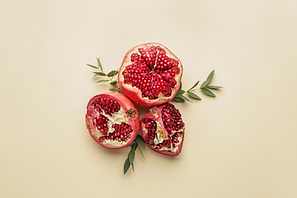
Pomegranates originated in the region between Iran and Northern India, where they have been cultivated for thousands of years.
Although most people associate the pomegranate with its mysterious shape and prized seeds, its bark, roots, and rind are also utilized in medicinal foods, home remedies, and Ayurvedic formulations.
Ayurveda classifies pomegranate as sweet, sour, astringent, and bitter, with a cooling effect and a light quality. It is balancing for pitta and kapha but can imbalance vata. Pomegranates are low in calories and fat, high in fiber and some protein, and rich in calcium, iron, magnesium, phosphorus, potassium, vitamin C, and vitamin B9.
Their health benefits include acting as antioxidants, supporting heart health, regulating lipids, being easily digestible, and possessing antiviral properties. Additionally, they have anti-inflammatory effects that can relieve arthritis and joint pain, promote reproductive and prostate health, and act as aphrodisiacs. Their properties aid conditions such as anemia, fever, diarrhea, dysentery, and cough, and they have a positive impact on depression, osteoporosis, asthma, obesity, and Alzheimer's.
Pomegranate-Cucumber Chutney
Ingredients
4 teaspoons of dry pomegranate seeds- These can be found in many markets already
1 small cucumber (seeded)
½ cup fresh cilantro
¼ cup of fresh mint leaves
1 teaspoon of lemon juice
¼ tsp each of fennel and cumin powder
½ onion chopped (optional)
Salt, sugar, or chili powder to taste
Water as needed
Directions
1. Prep the whole pomegranate or wash the pomegranate seeds well.
2. Cut the cucumber, remove the seeds, and then cut it into smaller pieces for blending.
3. Add all the ingredients into a blender with a bit of water and blend until smooth.
4. Place into a container.


Comments