


Tempeh vs. Tofu

Updated: Nov 9, 2025
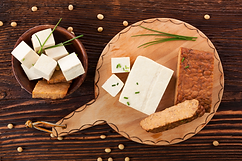
Both tofu and tempeh are derived from soybeans, and although they share similar ingredients, they differ in their composition. They both contain all the essential amino acids needed for a complete protein source, but tempeh does have a higher protein content. Both are low in calories, contain no saturated fats or cholesterol, and provide protein, omega-3 fatty acids, iron, calcium, and magnesium. Additionally, they contain isoflavones, which mimic estrogen that benefits menopause and supports low estrogen levels.
Tofu production is similar to making cheese, where soy milk is coagulated using salts, acids, or enzymes to achieve the desired texture, firmness, consistency, and pore size. The most common types of tofu are Soft/silken, which has the texture of custard. Firm tofu is drained with some moisture. Extra-firm has the least moisture, is rubbery in texture, and is easy to marinate. Processed types that were initially made before the days of refrigeration are now found in stores and are often marinated, baked, and smoked.
Tempeh originated in Indonesia and Malaysia and is made from fresh or cooked soybeans, as well as bacteria, fungi, and yeast that ferment to create a solid paste. Unlike tofu, tempeh can be found with added whole grains and flavorings, and if you have a soy allergy, you can discover soy-free tempeh made with legumes, whole grains, and hemp.
The history of tofu dates back to around 164 B.C.E., when Lord Liu An of the Han Dynasty coagulated soy milk and pressed the resulting curds into blocks. It was then introduced to Japan in the 8th century and spread throughout Asia, where it became a core ingredient of many cuisines.
From an Ayurvedic point of view, it is made up of air and earth elements, has an astringent taste, and is cold, dry, heavy, dull, and tamasic in nature. It balances the Pitta dosha but can cause Vata and Kapha to become out of balance, leading to possible gas, bloating, and sluggishness. Its biomedical actions include diuretic, anti-inflammatory, nutritive, uterine tonic, constipating, anti-cholesterol, estrogenic, and immunomodulatory effects.
As a chef, getting flavor infused into these products can be challenging. I marinate them for one to two days. Below is my procedure for tofu.
My Preparation of Tofu
1. Cut the block of tofu in half lengthwise and then into six slices, making twelve.
2. Place the twelve pieces flat on a kitchen towel, cover them with another towel, and then place some weight on top to assist in draining. (I use a large plate and a jar on top).
3. After about 20-30 minutes, place the tofu in a sealable container, pour the marinade or vinaigrette over it, and leave it for 1-48 hours.
4. Use a non-stick baking pan or oiled aluminum foil. Place the marinated tofu on an oiled surface and bake at 375 degrees for 15 minutes. Turn them over and repeat for an additional 15 minutes.


Comments