


Chocolate

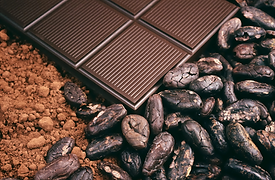
The English word “chocolate” is widely believed to derive from the Nahuatl (Aztec) word xocolātl, which combines xoco (bitter) and atl (water), referring to the unsweetened cacao drink consumed by the Aztecs.
When the Spanish brought cacao to Europe around 1600, the word chocolate was adapted into local languages, resulting in terms such as chocolat in French, Schokolade in German, and cioccolato in Italian. In the 19th century, innovations like the chocolate bar (Joseph Fry, 1847), milk chocolate (Daniel Peter & Henri Nestlé, 1875), and conching (Rodolphe Lindt, 1879) made chocolate smooth, sweet, and widely accessible.
Ripe cacao pods are harvested from cacao trees, split open to remove the beans, and fermented for several days to develop flavor. The fermented beans are then sun-dried and roasted, enhancing flavor and aroma. The roasted beans are cracked open, and the nibs are ground into cocoa mass. Cocoa butter may be separated, and the mass is mixed with sugar, milk (for milk chocolate), and other ingredients, then undergoes a “conching” process to refine it for smoothness. It is then tempered, with the chocolate repeatedly heated and cooled for a shiny finish and snap. The final stage is molding and packaging.
Types of Chocolate
Dark Chocolate: High cocoa content (usually 50–90%), little or no milk, bittersweet flavor.
Milk Chocolate: Contains milk powder or condensed milk, creamier and sweeter.
White Chocolate: Contains cocoa butter, sugar, and milk solids, but no cocoa solids.
Ruby Chocolate: New variety made from ruby cocoa beans; pink color, fruity flavor.
Other Varieties: Flavored chocolates, filled chocolates, and chocolate blends.
Ayurvedic Perspective of Chocolate
Pure cacao is bitter and astringent, sweet, stimulating, heating, and slightly oily.
It can aggravate Vata but also has a grounding effect; it is heating and stimulating for Pitta, and its bitterness is good for Kapha, but the sugar and possible dairy can increase the dosha.
It is rich in antioxidants (flavonoids), may support heart health by lowering blood pressure and improving cholesterol, can enhance mood by stimulating serotonin and endorphin production, and has mild aphrodisiac qualities.


Comments